Stinky! - The science of body odor, and why East Asians aren’t affected very much
When my older brother was packing for college, his admissions checklist strongly recommended that he bring several sticks of deodorant. Despite our parents’ advice against it, he followed his college’s instructions, but by the time he graduated, most of his deodorant was still unused. However, no one ever complained about him having body odor. This anecdote might seem unusual, but it reflects a well-documented and fascinating biological phenomenon rooted in human genetic variation.
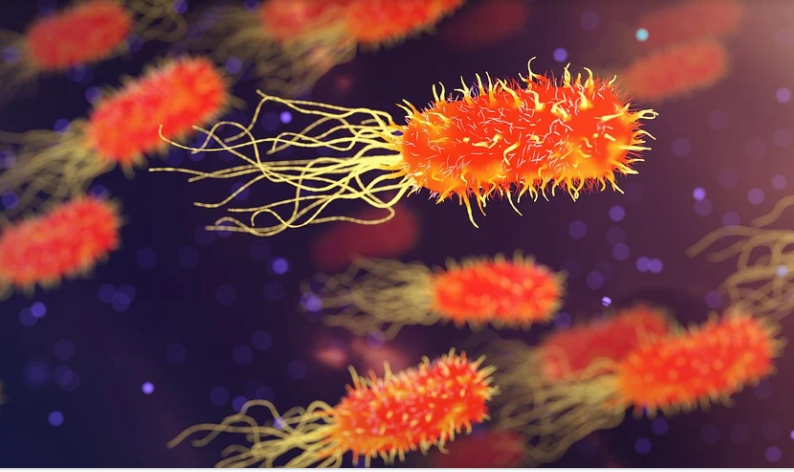
Firstly, it’s crucial to understand how body odor, especially in the axillary (armpit) region, actually forms. Naturally-occurring bacteria on the skin metabolize odorless compounds in sweat and expel odorous volatile organic compounds (VOCs) as a byproduct. Key precursor compounds in sweat that contribute to body odor include 3-hydroxy-3-methyl-hexonic acid (HMHA), (E)-3-methyl-2-hexenoic acid (3M2H), and 3-methyl-3-sulfanylhexan-1-ol (3M3SH).[4]
Every human has the ABCC11 (ATP-binding cassette, sub-family C, member 11) gene, which is located on chromosome pair 16 and has two allele types: a functional, dominant allele (normal) and a non-functional, recessive allele (mutated). [1] Globally, the prevalence of the mutated allele differs between ethnicity, as Yoshirua et al. (2006) found that some of the ethnic groups with the highest mutated ABCC11 allele frequencies include Koreans, Han Chinese, Mongolians, and Japanese, while the ethnic groups with the lowest mutated ABCC11 allele frequencies include African Americans, sub-Saharan Africans, Columbians, Iberians, and European Americans.[6]
By collecting and analyzing the sweat of 25 test subjects, Martin et al. (2010) found that among people who were homozygotes who had two mutated ABCC11 alleles (AA), heterozygotes who had one mutated and one normal ABCC11 allele (AG), and homozygotes who had two normal ABCC11 alleles (GG), the average sweat volume, microbial makeup, and bacterial abundance between different groups was not significantly different. This suggests that differences in axillary odor are best explained by variations in the chemical composition of sweat and not these other factors. [4]
Table 1. Amino-acid conjugates of key human body odorants in sweat samples of panelists with different genotypes, determined by LC-MS
Secreted amino-acid conjugates (μmol/2 pads)
Genotype ABCC11
Sex
Age
Ethnic population
Net weight sweat (g)/2 pads
HMHA–Gln
3M2H–Gln
Cys–Gly conjugate of 3M3SH
AA
M
29
Filipino
1.58
ND
ND
ND
AA
F
43
Chinese
1.28
ND
ND
ND
AA
M
43
Filipino
1.18
ND
ND
ND
AA
F
35
Korean
1.11
ND
ND
ND
AA
F
27
Chinese
2.05
ND
ND
ND
AA
F
47
Filipino
1.10
ND
ND
ND
AA
F
50
Filipino
0.72
ND
ND
ND
AA
F
33
Filipino
2.02
ND
ND
ND
AA
M
28
Hong Kong Chinese
0.60
ND
ND
ND
AA
F
40
Filipino
1.31
ND
ND
ND
AA
F
40
Filipino
1.67
ND
ND
ND
Median AA
1.28
AG
F
31
Filipino
1.47
1.23
0.17
Detectable, <0.03 μmol
AG
F
38
Filipino
0.84
1.58
0.23
0.041
AG
M
32
Filipino
0.83
0.06
Detectable, <0.03 μmol
ND
AG
M
37
Filipino
0.59
2.71
0.40
Detectable, <0.03 μmol
AG
F
25
Thai
0.90
0.89
0.14
Detectable, <0.03 μmol
AG
M
31
German
1.42
1.18
0.18
0.045
AG
F
25
German
1.64
0.54
0.10
Detectable, <0.03 μmol
Median AG
0.90
1.180
0.170
GG
F
45
Filipino
1.74
0.77
0.13
Detectable, <0.03 μmol
GG
F
45
Filipino
0.39
0.75
0.11
Detectable, <0.03 μmol
GG
F
28
German
0.71
1.30
0.19
0.041
GG
F
33
German
1.23
1.12
0.16
0.038
GG
M
25
German
0.45
2.65
0.43
0.051
GG
F
35
German
0.68
0.34
0.09
Detectable, <0.03 μmol
GG
M
39
Swiss
4.05
0.85
0.18
ND
Median GG
0.71
0.85
0.160
Figure 1. Structures of the key known human body odor precursors. (a) Nα-3-methyl-2-hexenoyl-glutamine (3M2H–Gln). (b) Nα-3-methyl-3-hydroxy-hexanoyl-glutamine (HMHA–Gln). (c) Cys–Gly conjugate of 3-methyl-3-sulfanyl-hexanol (3M3SH).
These three key precursor compounds (Figure 1) were undetectable in AA individuals (East and Southeast Asians) but were significantly higher in AG individuals (Southeast Asians and Caucasians) and GG individuals (only Caucasians) (Table 1). This suggests that the mutated ABCC11 allele inhibits production of these precursor compounds.[4]
Figure 2. ABCC11 genotype (rs17822931) of 32 cerumen donors
ABCC11 also affects the chemical composition of cerumen (earwax). Prokop-Prigge et al. (2016) found through testing the cerumen of different ethnic groups that many of the same VOCs present in axillary odor also exist in cerumen. However, people of African descent (AfD) and people of Caucasian descent (CaD) tended to have much higher concentrations of VOCs in their cerumen than people of Asian descent (AsD). In this study, all AfD and CaD had two normal ABCC11 alleles (CC), while all AsD had at least one mutated ABCC11 allele (CT or TT).[5] (Figure 2)
Figure 3. Comparison of VOCs from the headspace of cerumen samples from individuals of African (AfD) (N = 10, black), Caucasian (CaD) (N = 11, white), and Asian (AsD) (N = 11, gray) descent averaged over three sample collections. Error bars represent standard error. Asterisks denote compounds that vary significantly (P<0.01) across ethnic groups.
The amounts of certain VOCs, such as butyric acid, isovaleric acid, and hexanoic acid tended to be much higher in AfD and CaD than AsD (Figure 3). Phenotypically, VOC-heavy cerumen that is typical in African and Caucasian populations (97-100%) is associated with a yellow and odorous earwax (wet-type corresponding to normal ABCC11 alleles), while the relatively VOC-free cerumen that is typical in East and Southeast Asian populations (80-95%) is associated with a white and odor-free earwax (dry-type corresponding to mutated ABCC11 alleles). These findings suggest that the mutated version of ABCC11 is responsible for differences in cerumen composition, odor, and color.[5]
So why exactly does the mutated version of ABCC11 cause different chemical compounds to be expressed in both sweat and earwax? The purpose of the ABCC11 gene is to transport chemicals out of a cell, and the method by which this process occurs is well-documented. Harker et al. (2014) explains that ABCC11 allows for the production of a protein which acts as an ATP-driven efflux pump. As an active transporter embedded in the cell membrane, the efflux pump transports unwanted chemicals out of the cell. By mapping out the genotype of test subjects, it was determined that the actual mutation that affects ABCC11 and creates the recessive allele that is common in East and Southeast Asian populations is what is known as a single nucleotide polymorphism (SNP), which occurs at base pair 538 of ABCC11 and changes the normal guanine nucleotide to an adenine. This single nucleotide change causes the entire protein to become warped, preventing it from functioning normally and therefore preventing the transport of precursor compounds of body odor (which are formed in a cell) in sweat and earwax to the skin’s surface. This SNP is the main mechanism behind the often less-prevalent axillary and cerumen odor of East and Southeast Asians compared to Caucasians and Africans.[2]
However, these studies’ results do not indicate that people who have the full, mutated ABCC11 gene do not produce body odor at all. Harket et al. (2014) conducted an experiment which had the axillary regions of individuals who had different genotypes of ABCC11 (AA being homozygous recessive, GA being heterozygous, and GG being homozygous dominant) blindly assessed for odor after 5 and 24 hours of a controlled wash (Table 2).
Table 2. Five hour mean malodour scores of the different genotype groups.
Group
MMS 5 hr
AA
2.59
GA
3.26
GG
3.21
Table 3. Twenty-four mean malodour scores of the different genotype groups.
Group
MMS 24 hr
AA
2.60
GA
3.40
GG
3.50
A mean malodour score (MMS) of >2 indicates an odor that is noticeable to others. These results show that the vast majority of humans will produce noticeable body odor no matter which version of ABCC11 they possess; however, those with the fully mutated ABCC11 gene (AA) tend to produce a less noticeable axillary odor than those with at least one normal ABCC11 allele (GA and GG). It is notable that individuals that possessed one mutated ABCC11 allele (GA) had a MMS at both 5 and 24 hours that was not significantly different from individuals who had no mutated ABCC11 alleles (GG) (Table 2). The reason behind this phenomenon is that having two mutated alleles provide an individual with no ATP-driven efflux pumps to transport precursor compounds which contribute to axillary odor out of a cell, while having at least one normal allele allows at least some pumps to transport these precursor compounds onto the skin and therefore cause strong axillary odor.[2]
These studies’ findings may explain why deodorant brands in China struggle to gain popularity.[3] On the other hand, it explains why deodorant brands do so well in the West, especially with people of Caucasian and African descent. Deodorant usage therefore tends to be lower for East Asians than other ethnicities, but this does not imply that they have poor hygiene or increased body odor – rather, they might just not need it as much.
Well, big brother, you should have listened to Mom and Dad after all. Turns out, you didn’t need so much deodorant in college! The next time you have to take that extra deodorant swipe – or not – you can thank genetics and a single nucleotide polymorphism – or lack thereof – for your situation.
References
[1] Gene: ABCC11. (n.d.). GRCh37. Retrieved September 27, 2025, from https://grch37.ensembl.org/Homo_sapiens/Gene/Summary?db=core;g=ENSG00000121270;r=16:48200821-48281479
[2] Harker, M., Carvell, A.-M., Marti, V. P., Riazanskaia, S., Kelso, H., Taylor, D., Grimshaw, S., Arnold, D. S., Zillmer, R., Shaw, J., Kirk, J. M., Alcasid, Z. M., Gonzales-Tanon, S., Chan, G. P., Rosing, E. A., & Smith, A. M. (2014). Functional characterisation of a SNP in the ABCC11 allele—Effects on axillary skin metabolism, odour generation and associated behaviours. Journal of Dermatological Science, 73(1), 23-30. https://doi.org/10.1016/j.jdermsci.2013.08.016
[3] Guo, O. (2018, February 3). Aiming at China's armpits: When foreign brands
misfire. The New York Times. https://www.nytimes.com/2018/02/02/business/
china-consumers-deodorant.html
[4] Martin, A., Saathoff, M., Kuhn, F., Max, H., Terstegen, L., & Natsch, A. (2010). A functional ABCC11 allele is essential in the biochemical formation of human axillary odor. Journal of Investigative Dermatology, 130(2), 529-540. https://doi.org/10.1038/jid.2009.254
[5] Prokop-Prigge, K. A., Mansfield, C. J., Parker, M. R., Thaler, E., Grice, E. A., Wysocki, C. J., & Preti, G. (2014). Ethnic/Racial and genetic influences on cerumen odorant profiles. Journal of Chemical Ecology, 41(1), 67-74. https://doi.org/10.1007/s10886-014-0533-y
[6] Yoshiura, K.-I., Kinoshita, A., Ishida, T., Ninokata, A., Ishikawa, T., Kaname, T., Bannai, M., Tokunaga, K., Sonoda, S., Komaki, R., Ihara, M., Saenko, V. A., Alipov, G. K., Sekine, I., Komatsu, K., Takahashi, H., Nakashima, M., Sosonkina, N., Mapendano, C. K., . . . Kaneko, A. (2006). A SNP in the ABCC11 gene is the determinant of human earwax type. Nature Genetics, 38(3), 324-330. https://doi.org/10.1038/ng1733